CITIZEN’S CHARTER, 2026
 |
Administrative Training Institute Government of Mizoram
 |
New Secretariat Complex, Khatla Phone : 0389 2335830
Email : atimizoram@gmail.com Website: www.ati.mizoram.gov.in
THE INSTITUTION AND THE INFRASTRUCTURE
Mandate of the State Administrative Training Institute
The State Administrative Training Institute (ATI) is the apex training institution of Mizoram, as envisaged under the National Training Policy, 2012. It is mandated to play a leading role in coordinating training across departments and sectors and to ensure effective implementation of the Mizoram State Training Policy, 2013 through adequate manpower, infrastructure, and financial support.
The key mandates of ATI include:
- Mainstreaming training in the process of Governance.
- Conducting need-based training programmes for government employees at all levels.
- Achieving excellence in training quality through self-assessment and benchmarking.
- Providing technical support to departments in preparing Annual Training Plans and outsourcing training where required.
- Establishing networks with other institutions to share resources, expertise, and best practices.
- Maintaining a comprehensive database of trained personnel.
- Continuously upgrading the skills of trainers and evaluating their performance.
- Reviewing and developing curricula, course content, and training methodologies based on feedback and client needs.
- Undertaking evaluation studies to assess the impact of training on organizational performance.
- Giving special emphasis to behavioural and attitudinal training.
Organizational Set-up
The Administrative Training Institute (ATI), Government of Mizoram, established in 1983, stands as the premier institution dedicated to strengthening the capacities of government personnel across all levels—from Group ‘A’ officers to Group ‘D’ staff. Since its inception, the Institute has played a pivotal role in enhancing administrative efficiency and promoting effective governance within the State.
Over the years, ATI has steadily broadened its scope of training programmes, deepened its engagement with stakeholders, and continuously upgraded its infrastructure to meet emerging administrative and developmental challenges.
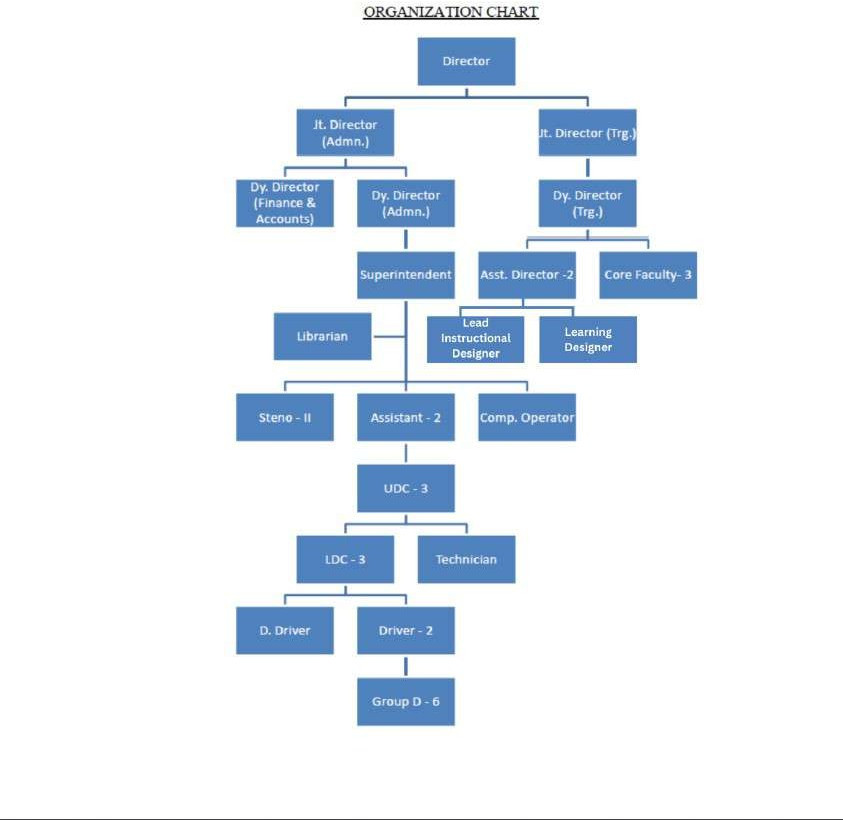
The Institute is led by a Director, supported by two Joint Directors overseeing Administration and Training respectively. Its academic and administrative responsibilities are carried forward by a team comprising Deputy Directors, Assistant Directors, Core Faculties, a Superintendent, and dedicated supporting staff. The total strength of the Institute is 40 personnel. The Department of Personnel & Administrative Reforms, Government of Mizoram, functions as the administrative department of ATI.
Financial support for the Institute’s core and routine activities is provided by the Government of Mizoram. In addition, various training programmes are strengthened through grants from the Government of India’s Department of Personnel & Training, while scheme-specific trainings receive funding from the respective Central Ministries.
Through its sustained commitment to capacity building and professional excellence, ATI continues to serve as a cornerstone of administrative development in Mizoram.
Infrastructure and Facilities
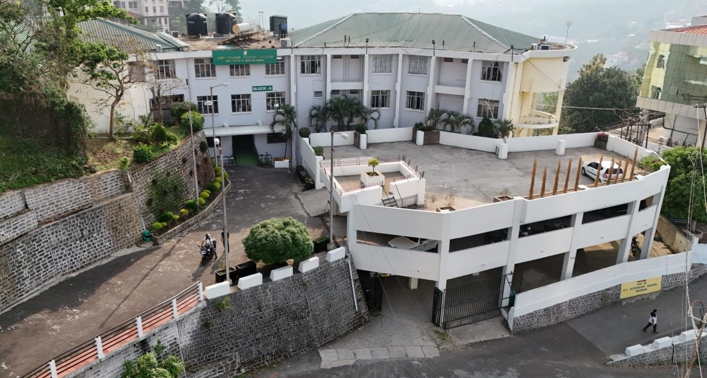
The Institute campus comprises five distinct blocks: Block ‘A’ (Administrative Block), Block ‘B’, Block ‘C’, an Auditorium, and a Garage building - each contributing to the smooth functioning of academic and residential activities.
Block ‘A’, the Administrative Block serves as the nucleus of the Institute, accommodating three well-equipped training halls, administrative offices, and a resourceful library. Block ‘B’ houses two additional training halls, a spacious conference hall, a cafeteria, DLL Studio and comfortable guest rooms for visiting faculty and officials. Block ‘C’ is equipped with a modern computer laboratory featuring 30 computers, along with a hostel facility comprising 15 rooms (with 30 beds) and five guest rooms to accommodate trainees and guests.
The Auditorium, with a seating capacity of 200, provides an ideal venue for seminars, conferences, and large-scale training programmes.
Altogether, the Institute boasts five training halls, a fully functional auditorium, 15 hostel rooms, and five guest rooms. All training facilities are furnished with modern teaching aids, including interactive boards, LCD projectors, computers, and Wi-Fi connectivity, ensuring a conducive and technology-enabled learning environment.
The Institute library houses over 5,000 volumes and is continually expanding its collection while striving to establish linkages with reputed libraries for enhanced knowledge sharing. Additionally, a canteen and limited staff quarters are available within the campus, contributing to the overall convenience and functionality of the Institute.
Training Programmes
In pursuance of the directives issued by the DP&AR, the institute conducts Mandatory Foundation Training for all Group A, B, C, and D employees during their probation period. Successful completion of this training is a prerequisite for confirmation in service. The duration of the programme is two weeks for Group A, B, and C employees, and one week for Driver and Group D employees.
In addition to these foundation courses, the Institute conducts specialized Foundation Trainings for the Combined Civil Services—namely the Mizoram Civil Service (MCS), Mizoram Finance & Accounts Service (MF&AS), and Mizoram Information Service (MIS) once annually. Similarly, Foundation Training for the Junior Grade of the Mizoram Secretariat Service (MSS) is conducted once each year.
The Institute also organizes in-service and mid-career training programmes for officers of MCS, MSS, and MF&AS under the State Training Programmes framework, thereby promoting continuous professional development and administrative excellence.
Further, ATI conducts approximately 50 training programmes annually under the Department of Personnel & Training’s State Category Training Programme (DoPT–SCTP). These programmes cater not only to government officials but also to local bodies, village councils, and non- governmental organizations. Special training programmes for departmental officers are also organized on request, subject to the availability of slots in the training schedule. Apart from this, Trainer/Faculty Development Training programmes like Direct Trainers’ Skill and Design of Training are also conducted.
Most programmes are delivered by in-house faculty members, with Course Directors and Coordinators designated for each training. For highly specialized or technical subjects, external resource persons with domain expertise are invited as and when required.
An Annual Training Calendar is prepared and published on the Institute’s official website and circulated to all Government Departments, Commissions, and Boards to ensure maximum participation and benefit. The training plans are aligned with the State Training Policy issued by the Government of Mizoram, as well as the guidelines of the Government of India.
The Institute strives to maintain a balanced approach between generic and domain-specific training to ensure relevance and comprehensive coverage of professional needs. Awareness programmes are extended to NGOs and citizen groups, while technical courses are primarily designed as refresher programmes focusing on strengthening basic and foundational skills.
National Standards for Civil Services Training Institutions
Under Mission Karmayogi, the flagship initiative of the Government of India aimed at building a future-ready and competent civil service, the Capacity Building Commission (CBC) has introduced the National Standards for Civil Services Training Institutions (NSCSTI) to promote excellence and continuous improvement in training institutions across the country. These standards provide a structured framework for systematic assessment across eight critical domains of institutional performance.
The Administrative Training Institute (ATI), Mizoram, was successfully onboarded onto the NSCSTI portal and completed the rigorous three-stage accreditation process, which included self- assessment, desktop assessment, and on-site evaluation. The desktop assessment received approval on 10 June 2024, followed by a comprehensive on-site assessment conducted from 24 - 25 June 2024. Subsequently, ATI was formally granted accreditation by the Capacity Building Commission on 26 June 2024 - an important milestone reflecting its commitment to quality and institutional excellence.
Going forward, the CBC will continue to extend its support to ATI through expert guidance in course development and uploading on the iGOT Karmayogi platform, facilitation of digital laboratories for in-house content creation, and strengthening collaboration between iGOT and the State Government to advance capacity-building initiatives.
Establishment of Digital Learning Laboratory
In alignment with the vision of Mission Karamyogi, the Administrative Training Institute, Mizoram has initiated and submitted a Project proposal for creation of Digital Learning Laboratory (DLL) under the Augmentation of Capacity of Training Institutes (ACTI) component of the TFA Scheme to create new e-content or convert existing content into e-learning content on identified competencies in line with objectives of Mission Karamyogi, National Priorities and competency requirement of Urban Local Bodies (ULBs)/ Panchayati Raj Institutions (PRIs) and other government organizations in States/UTs.
The proposal was approved by the DoPT (Training Wing) on 28th May, 2025, on a reimbursement basis. As ATI, Mizoram does not have an independent funding source to implement the project, financial support was sought from the Finance Department, Government of Mizoram, which has kindly sanctioned the required amount. The expenditure incurred will subsequently be reimbursed by DoPT.
The DLL will facilitate translation of courses into the local language and enable the uploading of Mizo-language content on the iGOT Karmayogi portal. Moreover, the DLL will create a dynamic learning environment - whether physical, virtual, or hybrid designed to strengthen and modernize training delivery through the effective use of digital tools and technologies. This will significantly enhance the Institute’s capacity to conduct training programmes and related activities in a more efficient, inclusive, and technology-driven manner.
Smart Class room
The ATI is committed to strengthening the administrative and governance capacities of government officials through quality training. At present, classroom instruction relies largely on traditional methods such as whiteboards and projectors. While functional, these methods do not fully meet the demands of modern technology-driven learning environments. To enhance training effectiveness, ATI initiates to transform all classrooms into smart classrooms equipped with interactive boards, establish a robust networking infrastructure across the institute, and develop an Online Training Management System for streamlined registration and scheduling.
The introduction of interactive boards will enable dynamic, multimedia-based teaching, real-time annotations, and participatory learning, thereby improving trainee engagement, comprehension, and retention. Upgrading the networking infrastructure will ensure seamless connectivity, high- speed internet access, and support for cloud-based resources, facilitating online and hybrid training models. Additionally, the Online Training Management System will automate course registration, attendance tracking, scheduling, and reporting, reducing administrative burden and improving efficiency.
Through these integrated initiatives, ATI aims to modernize its training ecosystem, enhance operational efficiency, and promote digital transformation in governance training, ensuring a competent and future-ready administrative workforce in Mizoram.
***************************************
VISION
- To emerge as a premier institution of excellence in capacity building.
- To nurture knowledge and enhance professional skills of public servants.
- To foster ethical awareness and strengthen responsiveness in governance.
- To promote citizen-centric administration.
- To ensure inclusive capacity-building by engaging all stakeholders.
- To conduct meaningful training programmes, collaborative initiatives, and innovative projects.
- To contribute to transparent, accountable, and effective public service delivery.
- To transform traditional classrooms into smart classrooms, integrating modern technology and digital tools to enhance learning effectiveness and improve the overall training experience for trainees.
MISSION
- To adopt a systematic and structured approach to training, ensuring proper training needs assessment, planning, implementation, and evaluation.
- To actively collaborate with client departments in the formulation of training plans, aligning programmes with departmental goals, emerging challenges, and policy priorities.
- To design and deliver relevant, need-based training programmes, addressing competency gaps and enhancing the knowledge, skills, and attitudes of public servants.
- To institutionalize and promote good practices, fostering a culture of continuous improvement, innovation, and excellence in governance.
FUNCTIONS
- To adopt a systematic approach to training, ensuring proper planning, implementation, and evaluation.
- To collaborate with client departments in preparing training plans, aligning them with departmental needs and priorities.
- To introduce relevant and need-based training programmes to address competency gaps.
- To institutionalize and promote good practices for continuous improvement in governance.
STAKEHOLDERS/CLIENTS
- A Within the Government
- Officer Trainees of the Mizoram Civil Service (MCS)
- Officer Trainees of the Mizoram Secretariat Service (MSS)
- Officer Trainees of the Mizoram Finance and Accounts Service (MFAS)
- Fresh recruits in various cadre/posts (Direct, regularization, absorption) for Mandatory Foundation Training during their probation period
- In-service Officials of various levels in the Government
- Outside the State Government
- Members of the NGOs.
- Local Councils & Village Councils
- Private suppliers and service providers
- Training/Academic institutes and organizations
- Trainings of Under Secretary (Senior Grade) Section Officers in Central Secretariat on attachment basis
- Attachment of All India Service
- Training/Awareness on Consumer Rights, Sevottam, RTI
SERVICE STANDARDS
MAIN SERVICES
Training related Services
Sl. No. | Main Services | Officer Responsible for delivery of service | Contact |
1 | Training Calendar | Lalrimawii Hmar, Joint Director(Trg.) | 8730971042 |
2 | Training for Govt. Officials (including officials of Autonomous District Councils), Civil Society Organizations & NGOs. | Lalbiakenga, Dy. Director (Trg.) | 9436197512 |
B. Tlangdingliana, Asst. Director (Trg.) | 7005346981 | ||
Joseph Lalhmangaiha, Asst. Director | 9612540901 | ||
Lalnunmawii Varte, Core Faculty | 8794575896 | ||
Golda Dell Zohmangaihi, Core Faculty | 9615711854 |
Management related Services
Sl. No. | Main Services | Officer Responsible for delivery of service | Contact |
1 | Procurement of stocks | F. Lalremmawia, Dy. Director (F&A) & Lalbiakkimi, Dy. Director (Adm.) & DDO | 9862710980 &
9862331950 |
2 | Procurement of services | ||
3 | Settlement of bills | ||
4 | Record Management & Establishment Administration | Zoramthangi, Superintendent | 9436145324 |
6 | Internal Complaint Committee | Lalnunmawii Varte, Core Faculty & | 8794575896 |
|
| Zoramthangi, Superintendent | 9436145324 |
7 | Right to Information Act, 2005 (Nodal Officer) | B. Tlangdingliana, Asst. Director (Trg.) | 9612112410 |
8 | Sevottam (Nodal Officer) | Lalbiakenga, Dy. Director (Trg.) | 9436197512 |
Management related Services
Sl. No. | Main Services | Officer Responsible for delivery of service | Contact |
1 | Misc. Services Pension matters of retired Govt. servants | Lalbiakkimi, Dy. Director (Adm.) & Zoramthangi, Superintendent | 9862331950 & 9436145324 |
TRAINING CALENDAR
Name of Service |
Process followed |
Name & designation of official for individual steps | Name & designation of official for overall steps |
Time taken for individual services |
Training Calendar | Drafting of Training Calendar | Jt. Director (Trg.) Dy. Director (Trg.) Asst. Directors, Core Faculties | Joint Director (Training) | December & January |
Approval of Training Calendar | Director, Jt. Director (Trg.) Dy. Director (Trg.) Asst. Director (Trg.) | Secretary DP&AR (G&TW) | February | |
Printing of Training Calendar | Dy. Director (Trg.) Asst. Director (Trg.) |
| On or before 15th March | |
Distribution of Training Calendar | Dy. Director (Admn.) |
| March | |
Nomination for Training | Issue of inviting nomination | Course Directors concerned | Joint Director (Trg.) | 30days before commencement of Training |
Last date for submission of nomination | Within 15 days from date of issue of nomination | |||
Selection of candidates for training | Course Directors concerned | Director | 7 days before commencement of Training | |
SERVICE STANDARDS
TRAINING RELATED SERVICES
Name of Service |
Process followed | Name & designation of official for individual steps | Name & designation of official for overall steps | Time taken for individual services |
Training to Government officials | Designing new training programme and updating existing programmes | Course Directors and Course Coordinators concerned | Joint Director (Trg.) | 15 days (from receipt of request from other Depts.) |
Vetting of training Programme by the client department | Joint Director (Trg.) | 10 days | ||
Approval of the training design | Jt. Director (Trg.) | Director | 2 days | |
Preparation for conducting the training | Course Directors concerned Dy. Director (Admn.) & Superintendent |
| 2 days | |
Training for Citizen Groups/ NGOs | Designing/updating of Training programme | Course Directors concerned | Jt. Director (Trg.) | 15 days |
Approval of training design | Jt. Director (Trg.) | Director | 2 days | |
Preparation for Conducting training | Course Directors concerned Dy. Director (Admn.) & |
| 2 days |
SERVICE STANDARDS
SUPPORT SERVICES FOR TRAINING/OFFICE MANAGEMNET
Name of Service | Process followed | Name &designation of official for individual steps | Name & designation of official for overall steps | Time taken for individual services | Time norm for services |
Procurement of Stock | Assessment of need | Dy. Director D(Admn.) | Jt. Director (Admn.) | 3 days |
30 days |
Estimation of quantity | Dy. Director (Admn.) | Jt. Director (Admn.) | 1 day | ||
Approvals and sanctions | DD/JD(Adm.) | Director | 4 days | ||
Tendering & procurement |
|
| 20 days | ||
Stock entry & distribution |
|
| 2 days | ||
Procurement of services | Assessment of need | Dy. Director (Admn.) | Jt. Director (Admn.) | 2 days |
28 days |
Estimation of scope of service | Dy. Director (Admn.) | Jt. Director (Admn.) | 3 days | ||
Approvals & sanctions | Director, Dy. Director (F&A) Dy. Director (Admn.) | Director | 3 days | ||
Tendering & award |
|
| 20 days | ||
Settlement of bills | Scrutiny | Dy. Director (Admn.) | Jt. Director (Admn.) | 2 day |
10 days |
Processing | Dy. Director (Admn.) | Jt. Director (Admn.) | 1 day | ||
Approval | Dy. Director (F&A) | Director | 2 days | ||
Disbursement &payment | Dy. Director (Admn.) |
| 5 days | ||
Record Management | Listing | Superintendent | Dy. Director (Admn.) | 30 days |
55 days |
Shifting | Superintendent | Dy. Director (Admn.) | 10 days | ||
Weeding | Superintendent | Dy. Director (Admn.) | 10 days | ||
Storing | Superintendent | Dy. Director (Admn.) | 5 days |
SERVICE STANDARDS
MISCELLANEOUS SERVICES
Name of Service |
Process followed | Name & designation of official for individual steps | Time taken for individual services |
Time norm for services |
Matters, if any, Pertaining to Government servants | Examination & Processing of applications/ reports | Superintendent | 5 days |
10 days |
Approval/rejection | Dy. Director D(Admn.) | 3 days | ||
Response & communication to the applicant | Dy. Director (Admn.) | 2 days |
GRIEVANCE REDRESS MECHANISM
Name of the office | Administrative Training Institute, |
Address | New Secretariat Complex, Aizawl |
WHOM TO CONTACT
1 | Director |
2 | Joint Director (Administration) |
3 | Joint Director (Training) |
4 | Deputy Director (Administration) |
HOW TO CONTACT
1 | Personal Meeting |
2 | Written Communication |
3 | Telephone |
TIMELINES FOR RESPONSE
Acknowledgement | Immediately |
Final Resolution | 30 days |
 |